
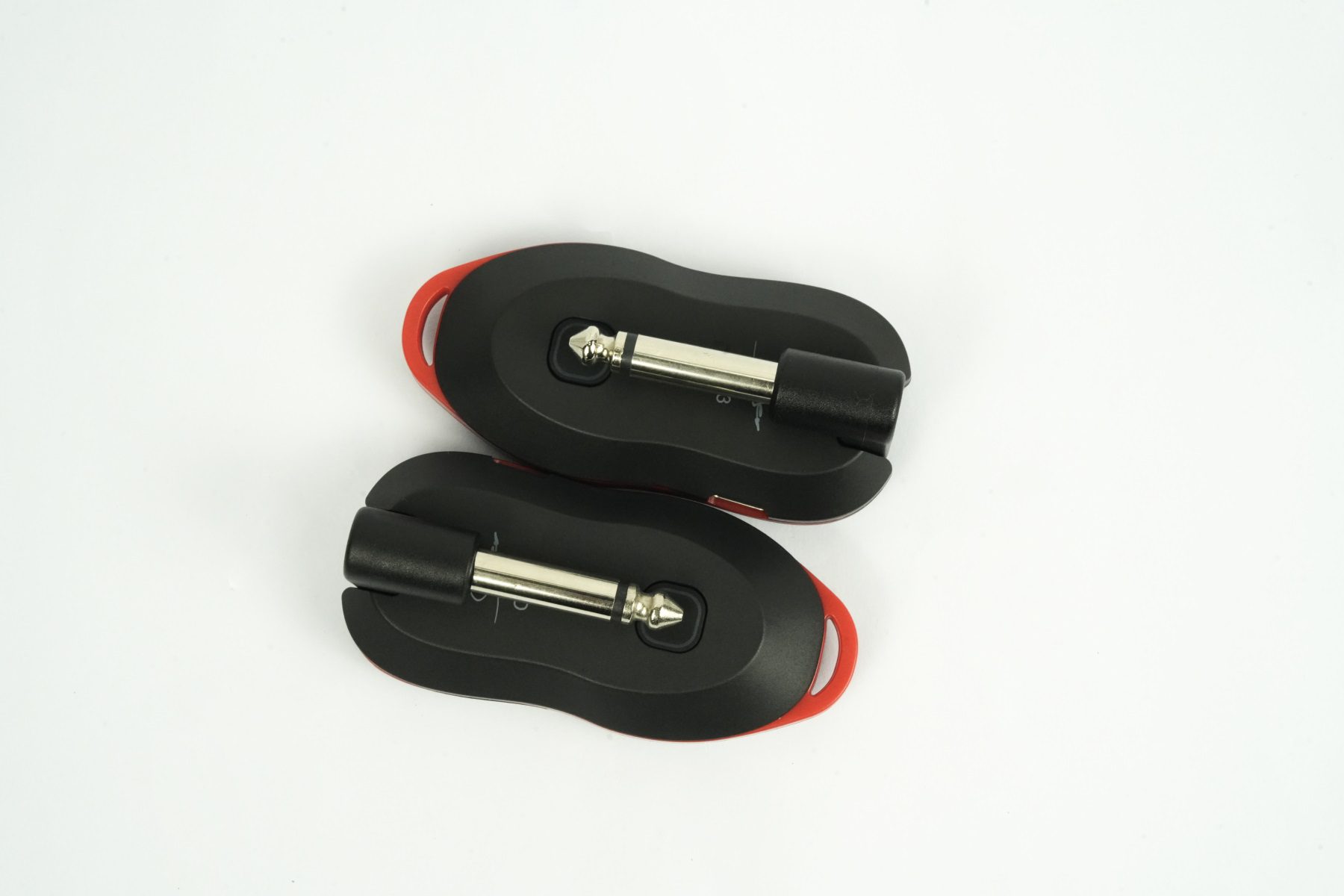
Guitar Wireless System Guide: Compatibility, Latency and Testing
Short answer: evaluate a guitar wireless system by checking connector fit, instrument compatibility, perceived response, link stability, charging workflow and recovery in the intended RF environment. Range or latency figures without a matching protocol should not become promises.
A wireless link replaces one part of the cable path, but it also introduces power, radio-environment and recovery questions. A store or stage team should test the complete transmitter-receiver pair with the actual instrument and destination equipment.

What to check before comparing wireless systems
- Confirm plug format, jack clearance and active/passive instrument requirements.
- Identify the receiver destination and expected input level.
- Record power, charging and low-battery behaviour from current documentation.
- Test the intended room, stage layout and nearby RF activity.
- Observe response, drop-outs, reconnection and mute behaviour.
- Keep a suitable cable backup and a dated test record.
Compatibility, response and RF environment
A quarter-inch plug that physically fits may still sit poorly against a recessed or angled jack. Check weight, rotation and clearance on each target instrument, and confirm documented compatibility before publishing a broad claim.
Perceived response should be judged with the same instrument, passage and monitoring level. A published latency figure is meaningful only with its test conditions; a brief tryout cannot prove a universal number.
RF performance changes with room construction, people, device density and placement. Walk the intended area, turn the performer naturally and record where a link becomes unstable rather than quoting a maximum range as a guaranteed working distance.
A practical evaluation framework
| Area | Record | Test | Do not assume |
|---|---|---|---|
| Fit | Plug, clearance, weight | Each target instrument | Physical fit proves compatibility |
| Power | Charge and indicators | Full rehearsal workflow | A percentage guarantees time |
| Link | Room and placement | Walk and rotate naturally | Maximum range is guaranteed |
| Recovery | Mute and reconnection | Interrupt and restore safely | Drop-outs always recover silently |
Treat the table as a test record, not a universal ranking. Suitability depends on the instrument, user, venue and full signal path.
A repeatable test workflow
- Inspect and charge the complete pair according to current instructions.
- Set a cable reference using the same guitar, destination and level.
- Connect the wireless pair and confirm correct transmitter/receiver placement.
- Play the same clean and dynamic passages while moving through the target area.
- Repeat connection, power-cycle and recovery checks; record every interruption.
The cable comparison is a diagnostic reference, not a promise that wireless must sound identical in every rig. Change one variable at a time.
Wireless risks and realistic limits
Do not publish universal range, latency, battery-life or interference-free claims without a current source and matching method. Local spectrum rules and venue conditions may also differ.
Place devices so plugs are not levered against the instrument. Protect hearing, use correct charging equipment and keep a tested cable available for recovery.
Use the SMIGER CW-3 wireless system page as the current SMIGER product reference.
For a retail, teaching or stage requirement, send the instruments, venue, destination equipment and backup plan through the SMIGERGUITAR business enquiry form.
Guitar wireless system FAQ
Will a wireless system fit every guitar?
No. Check jack location, clearance, plug orientation and documented electrical compatibility on each target instrument.
Is the published range guaranteed?
No. Range depends on the stated method and the actual RF environment, placement and obstacles.
Can I test latency by feel?
You can record a user impression, but a numeric claim requires a defined measurement method.
Do I still need a cable?
A tested cable is a useful fallback for troubleshooting and live recovery.
Document the real wireless workflow
A useful wireless evaluation combines physical fit, power management, controlled comparison, venue testing and a recovery plan.
Browse SMIGERGUITAR accessories and confirm current details with info@vinesmusic.com.


